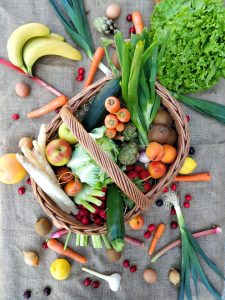
Ever notice how vibrant the color and how incredible a strawberry tastes when June rolls around? Or how much deliciously different a tomato is on a BLT come mid summer versus May? The flavor of these foods when they aren’t in season just can’t compare to the intense flavor that erupts from a bite of a food in season.
Besides beautiful color and rich flavor, there are other benefits to eating food that’s in season.
- Nutrient dense powerhouse. Seasonal produce is picked when it’s at the peak of ripeness which comes with more vitamins and minerals than out of season food. Out of season food often needs to be picked early and transported. During transportation, they get refrigerated to avoid spoilage. This results in loss of nutrients and less flavor. A study found that broccoli eaten in season, in fall, had twice as much vitamin C in it than broccoli eaten out of season in spring.1 Try eating foods picked soon after they are harvested to take advantage of the most nutrients.
- Helps increase the variety of foods you eat. Before industrialized agriculture, Americans ate 300 to 1000 different foods. Today, we eat 17 to 20 different foods on average. 2 The larger variety of plant foods, the better it is for nurturing healthy gut microbes. 3 An additional gut health benefit of eating a wide variety of foods is that there is less chances of food sensitivities developing. To learn more about foods that nourish the gut microbiome, check out this blog article Foods That Nourish Your Gut.

- Helps support your body’s natural nourishment. During the colder months of the year, our bodies crave foods that are warming and comforting, like winter squashes and root vegetables, that go easily into a hot pot of stew or soup. Leafy greens, radishes, cabbage, and asparagus all support detoxification in the spring. During the warmer months, our bodies crave foods that are cooler and more hydrating, like melons, peaches, tomatoes and cucumbers.
- Affordability. Foods in season tend to cost less because farmers are harvesting a large amount of the crop. Even more cost savings can be passed on when you buy local, avoiding extra expenses like traveling and storage.

- Supports your local farmers. Eating locally supports your local economy and farmland. It’s also easier to have a greater connection with the farmer that actually grew your food, allowing you to ask questions and learn more about the food and farming practice. Eating local means you are eating within the seasons.
There are many ways to source seasonal foods. You can find a local farmer, go to a farmer’s market, join a CSA (Community Supported Agriculture), or even grow your own. You can often find local produce at your grocery store. Ask the employees about local foods or local farms they support in their store.
Recap
Eating seasonally has many benefits, including more nutrients, a wider range of foods, supporting your body’s natural needs of nourishment, it’s more affordable, and supports your local farmers. If you are curious about which foods are in season each month, sign up for my monthly newsletter. I share what foods are in season each month, as well as other valuable information about gut health and nutrition so you can nourish and flourish.
References
- Wunderlich, S. M., Feldman, C., Kane, S., & Hazhin, T. (2008). Nutritional quality of organic, conventional and seasonally grown broccoli using vitamin C as a marker. International journal of food sciences and nutrition, 59(1), 34-45.
- Nutritional Therapy Association. Fatty Acids-Dysfunction. [PDF file]. 2020. P 3.
- Nutritional Therapy Association. Digestion-Practical Application. [PDF file]. P 17.
Leave a Reply